
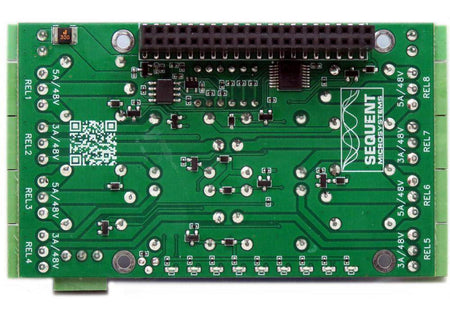

Eight Relays 4A/120V 8-Layer Stackable HAT for Raspberry Pi
Eight Relays 4A/120VAC, 24VDC N.O./N.C. contacts and LED indicators; RS485 Port.
Overview
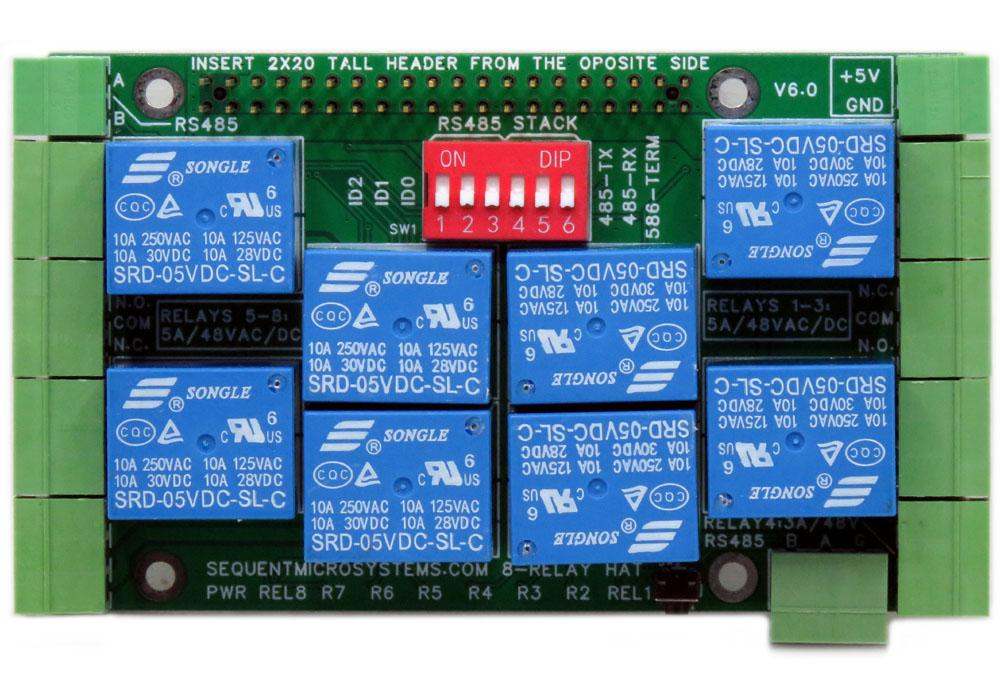
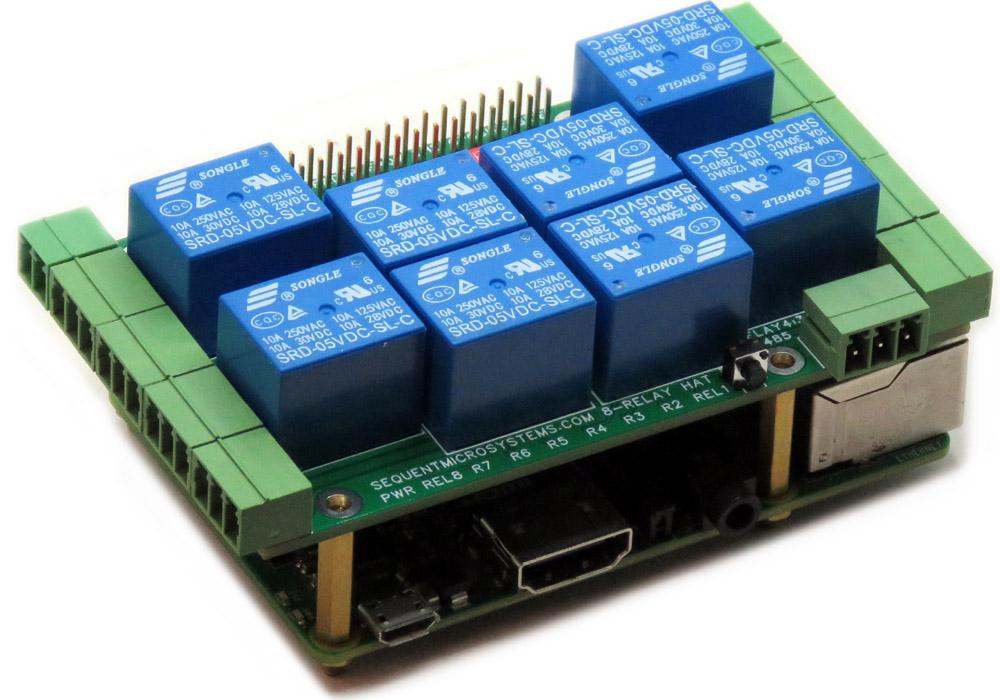
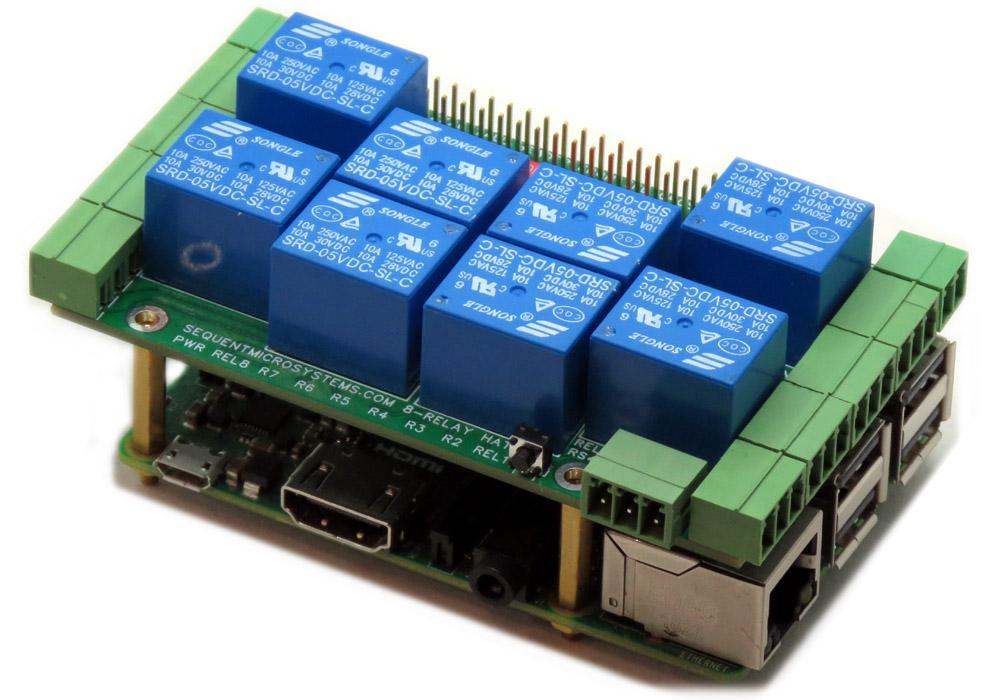
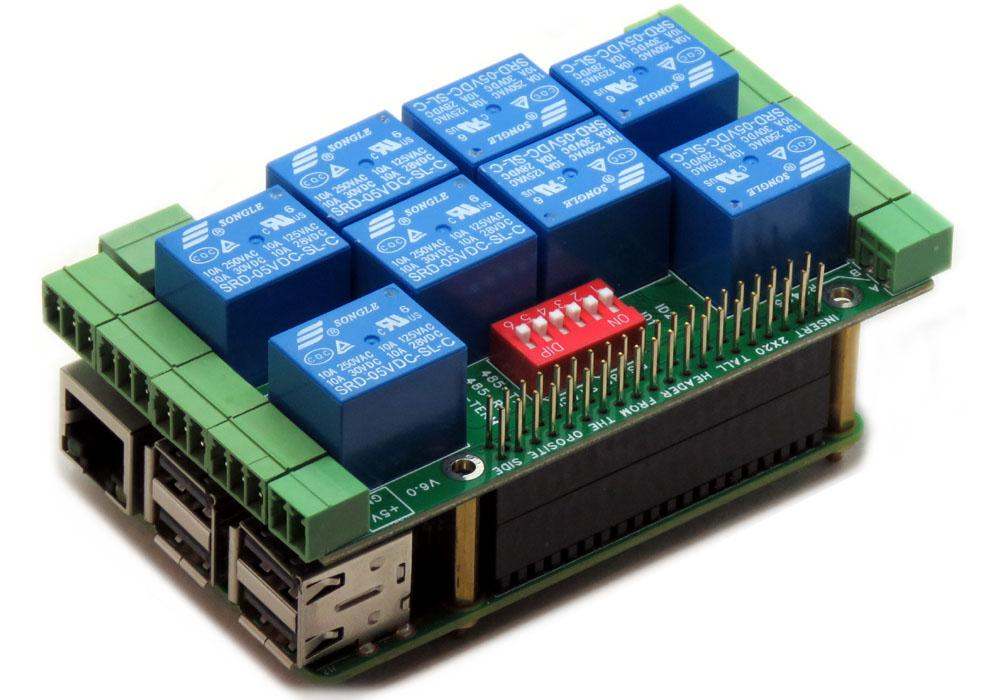
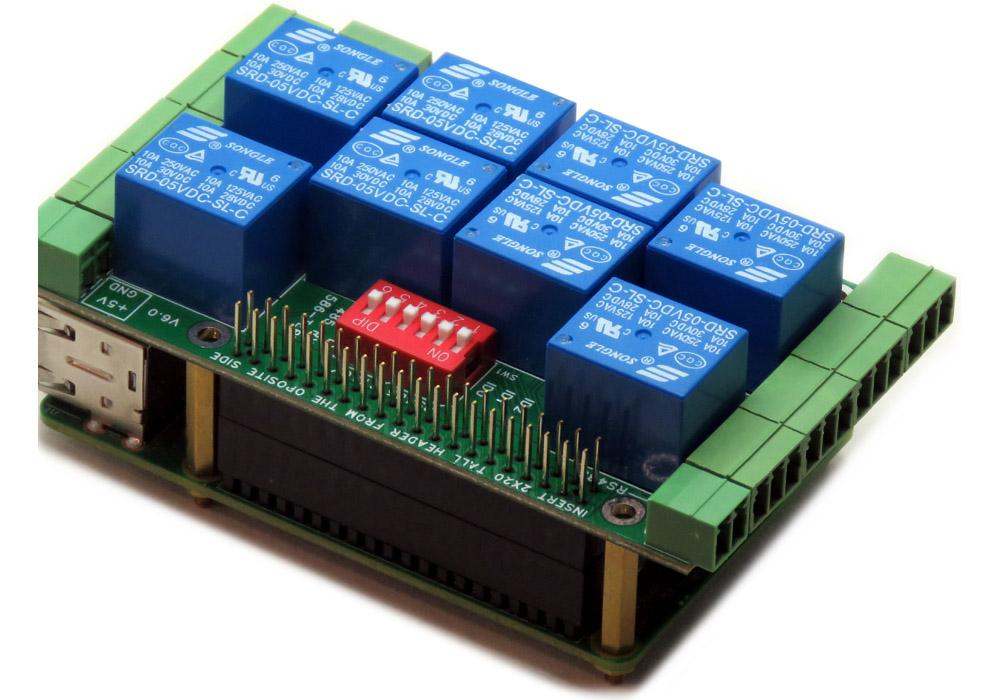
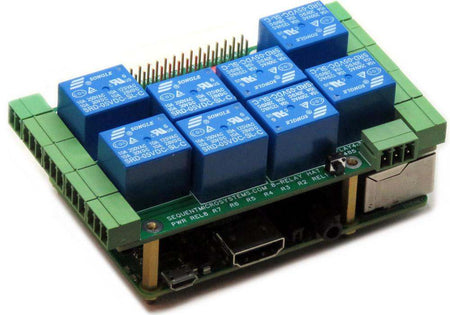
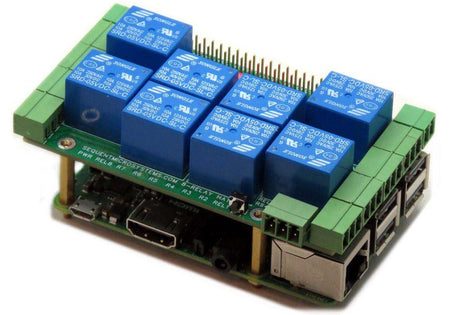
Add eight 4A/120VAC (24VDC) relay outputs to any Raspberry Pi using this 8-layer stackable HAT. Pluggable NO/NC contacts, individual status LEDs, and an RS485/MODBUS interface make it equally at home as a Raspberry Pi HAT or as a standalone industrial relay module controlled by a PLC.
- Eight relay outputs with NO/NC contacts, 4A at 120VAC — 24VDC rating
- Stack up to eight cards for a total of 64 relay outputs
- Individual status LED per relay output
- RS485/MODBUS RTU interface with TVS surge protection
- Onboard hardware watchdog for automatic Raspberry Pi recovery
- Pluggable field-wiring connectors for 26–16 AWG wires
- Works with any Raspberry Pi from Zero to 5
Works with Open Automation Software
Compatible with widely used tools for control, monitoring, and system integration.
 |
 |
 |
 |
 |
 |
INTERFACES AND I/O
| I/O's | Communication | Software Integration |
|---|---|---|
| • Eight Relay Outputs (NO/NC contacts) | • I2C Port to Raspberry Pi | • Command Line |
| • 4 A / 120 VAC — 24 VDC contact rating | • RS485 / MODBUS Port | • Python Library |
| • Node-RED nodes | ||
| • CODESYS Driver | ||
| • OpenPLC Module | ||
| • Home Assistant | ||
| Other Features | ||
| • Individual status LED per relay output | ||
| • Front-edge programmable pushbutton (GPIO 26) | ||
| • TVS surge protection on RS485 interface | ||
| • Built-in relay self-test | • Pluggable connectors 26–16 AWG wires | |
| • On Board Hardware Watchdog | • Onboard resettable fuse 5A | |
| • Eight Level Stackable | ||
DESCRIPTION
The Eight Relays HAT provides a reliable, expandable relay output platform for Raspberry Pi, combining industrial-grade switching capability with simple I²C control and wide software support.
Eight NO/NC relay contacts rated 4A at 120VAC or 24VDC. Each relay has an individual status LED along the card edge that illuminates when energized, allowing quick visual verification of output state.
The integrated RS485 transceiver operates as a MODBUS RTU slave under Raspberry Pi control, or standalone — connected directly to a PLC or industrial controller without a Raspberry Pi required.
A pushbutton at the card edge routes to GPIO 26 (pin 37). Use it to trigger a safe Raspberry Pi shutdown or any application-defined command with a custom monitoring script.
The hardware watchdog monitors Raspberry Pi activity and automatically power-cycles the computer if the software becomes unresponsive, ensuring continuous operation in unattended deployments.
TVS diodes on the RS485 interface protect against ESD and transient spikes. An onboard resettable 5A fuse protects against accidental shorts.
Up to 8 cards can be stacked on one Raspberry Pi for a total of 64 relay outputs. Different Sequent HAT types can be freely mixed in the same stack, using only I²C so all GPIOs remain available.
TECHNICAL DETAILS
CARD LAYOUT

MECHANICAL SPECIFICATIONS

DIP SWITCH AND STACKING
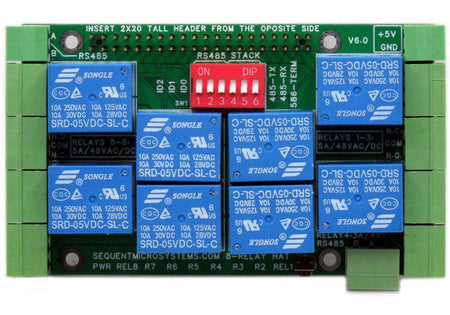
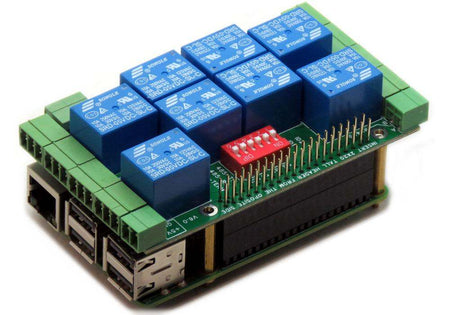
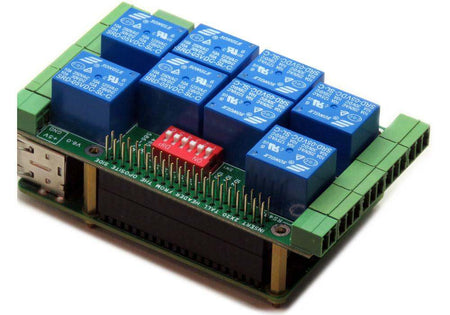
The onboard six-position DIP switch configures both the stack address and the RS485 port behavior. Cards of different Sequent HAT types can be freely mixed in the same stack.
| Switch | Name | Function |
|---|---|---|
| ID2 | Stack ID bit 2 | Binary stack address bit 2 (MSB) |
| ID1 | Stack ID bit 1 | Binary stack address bit 1 |
| ID0 | Stack ID bit 0 | Binary stack address bit 0 (LSB) — sets card level 0–7 |
| TX | RS485 TX select | ON: Raspberry Pi drives RS485 directly |
| RX | RS485 RX select | ON: Raspberry Pi receives RS485 directly |
| TERM | RS485 termination | Enable on the last card in an RS485 chain to prevent signal reflections |
ELECTRICAL SPECIFICATIONS
| Power | |
|---|---|
| Power supply | 5V / 8A pluggable 2-pin connector |
| Power consumption | 10 mA (all relays off); ~80 mA per relay when energized |
| Onboard resettable fuse | 5 A |
| Relay Contacts | |
|---|---|
| Contact configuration | NO and NC |
| Contact rating | 4 A at 120 VAC — 24 VDC |
| Electrical endurance | Min 105 cycles at 1,800 operations/hour, full load |
| Mechanical endurance | Min 107 cycles at 18,000 operations/hour, no load |
POWER REQUIREMENTS
Power supply: The Eight Relays Card requires 5V to operate. It can be powered from the Raspberry Pi over the GPIO bus or from its own 2-pin pluggable power connector. Relay coils are also powered from the 5V supply. The board draws 10mA with all relays off; each relay requires approximately 80mA when energized. If power is applied to the board connector, no separate Raspberry Pi power supply is needed.
PLUGGABLE CONNECTORS
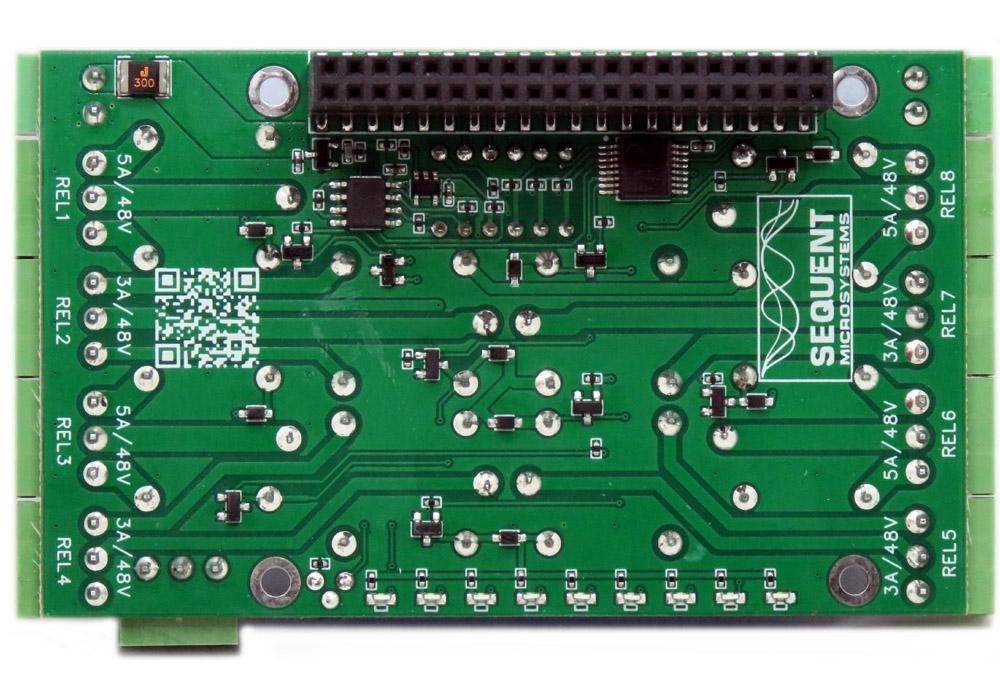
All relay outputs and the RS485 port connect to 3.5mm pitch pluggable screw terminal connectors, accepting wire gauges from 26 to 16 AWG. Connectors can be unplugged from the board for convenient field wiring and debugging without disturbing the rest of the installation.
RELAY SELF-TEST
The card can be tested before installation by running a self-test command from the command line. The card will cycle each relay on and off at 0.5-second intervals. The clacking of the relays and the lighting of the LEDs confirm that all relays are functioning.
8relind <id> test
COMMUNICATION INTERFACES
HARDWARE WATCHDOG
The Eight Relays HAT includes a hardware watchdog that ensures your system automatically recovers if the Raspberry Pi software becomes unresponsive. The watchdog is disabled at power-up and activates after it receives the first reset command from the Raspberry Pi.
| Watchdog Parameters | |
|---|---|
| Initial timeout period | Configurable — allows time for Raspberry Pi to boot and start the application |
| Running timeout period | Configurable — normal operating timeout |
| Off period | Configurable — duration the Raspberry Pi power is cut when timeout triggers |
| Reset counter | Stored in non-volatile flash; can be read or cleared at any time |
For a full list of watchdog commands, run: 8relind -h
COMPATIBILITY
| Interface | I2C |
| GPIO used | GPIO2 (SDA), GPIO3 (SCL) — 2 pins only; remaining 24 GPIO pins stay free |
| Max stack | 8 cards — up to 64 relay outputs; different Sequent HATs can be freely mixed |
| Compatible with | All Raspberry Pi versions from Zero to 5 (40-pin GPIO header) |
DOWNLOADS
COMPLIANCE
RoHS and REACH Compliance Declaration
WHAT'S INCLUDED
When you purchase the card you will receive the following items:
| 1. Eight Relays HAT for Raspberry Pi |
|---|
 |
| 2. Mounting Hardware | |
|---|---|
 |
|
| 3. Connector Plugs for all Outputs and RS485 | |
|---|---|
 |
|
QUICK START
- Plug your card on top of your Raspberry Pi and power up the system.
- Enable I2C communication on Raspberry Pi using
raspi-config. - Install the software from GitHub:
~$ git clone https://github.com/SequentMicrosystems/8relind-rpi.git~$ cd /home/pi/8relind-rpi~/8relind-rpi$ sudo make install~/8relind-rpi$ 8relind
The program will respond with a list of available commands. To read more about the cli, please refer to the README file. If you would rather use a different platform, you can access the same functionality through dedicated, ready-to-use integrations in the Downloads tab above.
Expand Your System
-
 In stock
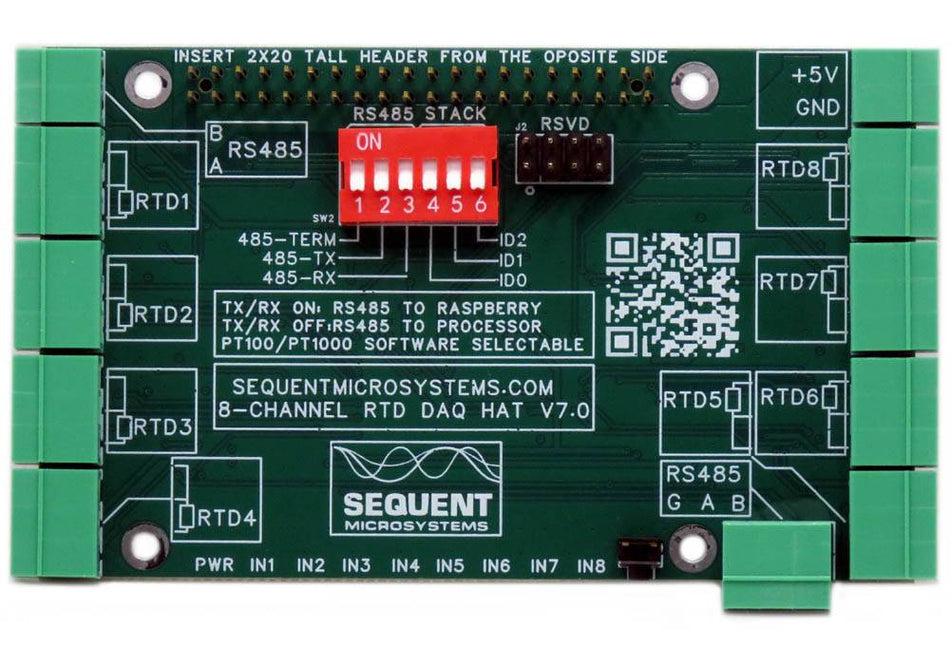
RTD Data Acquisition 8-Layer Stackable HAT for Raspberry Pi
Eight Channel RTD Data Aquisition HAT; 0.01% accuracy through calibration; PT100/1000 Sensors; RS485/MODBUS, Watchdog. -
 Coming soon
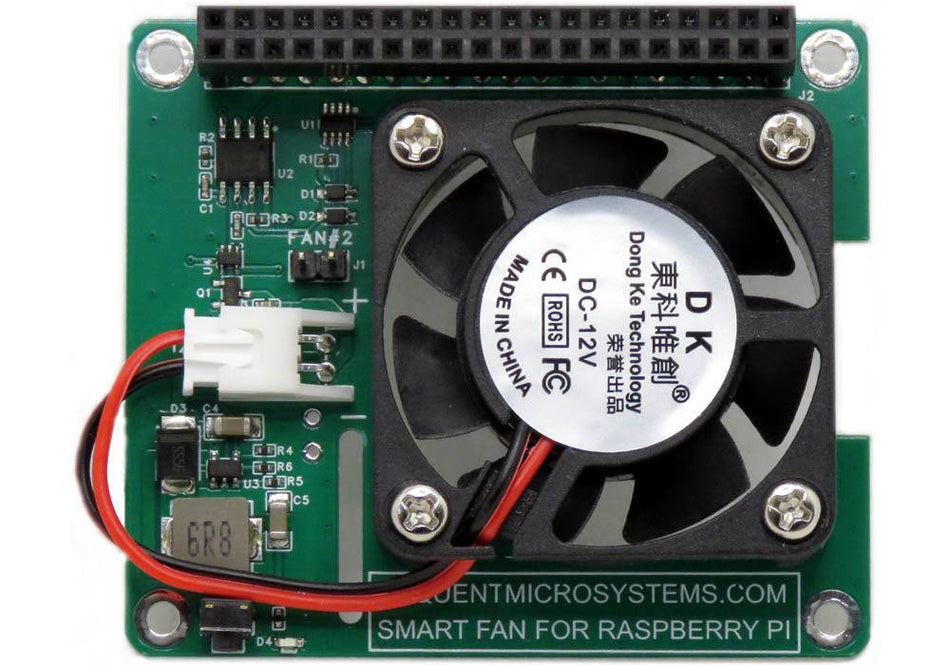
Smart Fan HAT the Best Cooling Solution for Raspberry Pi
PWM controlled 40x40x10mm Fan keeps Raspberry Pi temperature constant; Stackable with any other HAT. -
 In stock
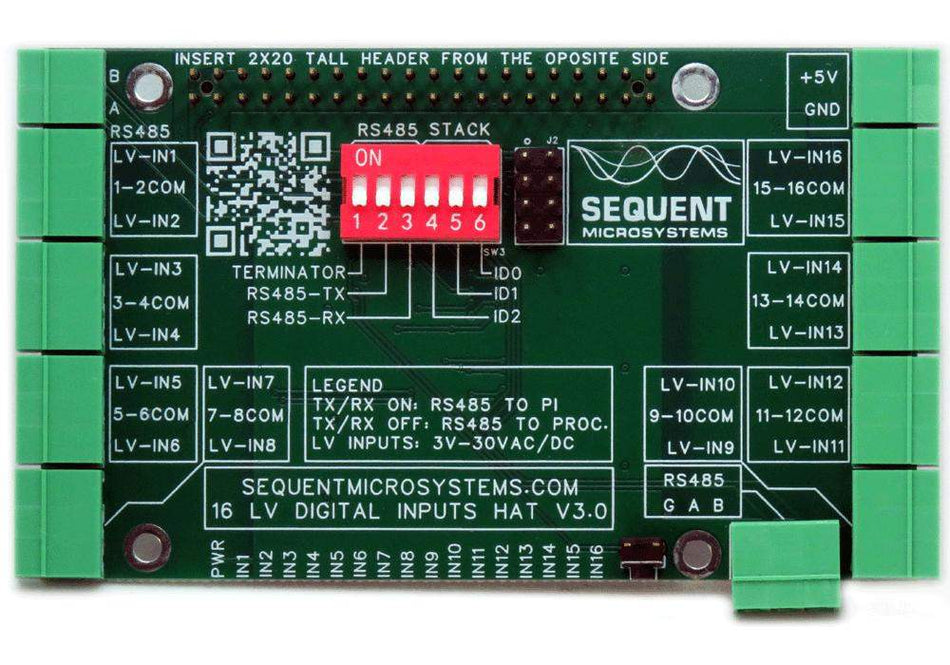
Sixteen LV Digital Inputs 8-Layer Stackable HAT for Raspberry Pi
Sixteen 3V-24V Opto-isolated Inputs with LED indicators; RS485/MODBUS, Hardware Watchdog. -
 In stock
Four Relays four HV Inputs 8-Layer Stackable HAT for Raspberry Pi
Four Relays 8A/240VAC; Four opto-isolated Inputs 3V-240V; RS485/MODBUS; Quadrature encoder, PPS counters, PWM inputs;