
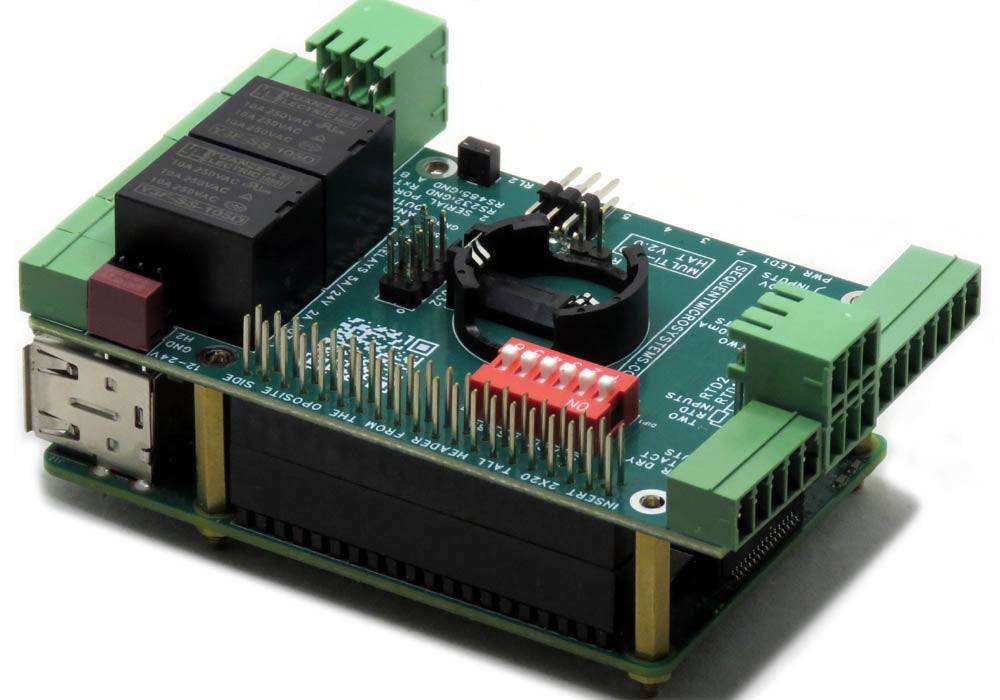
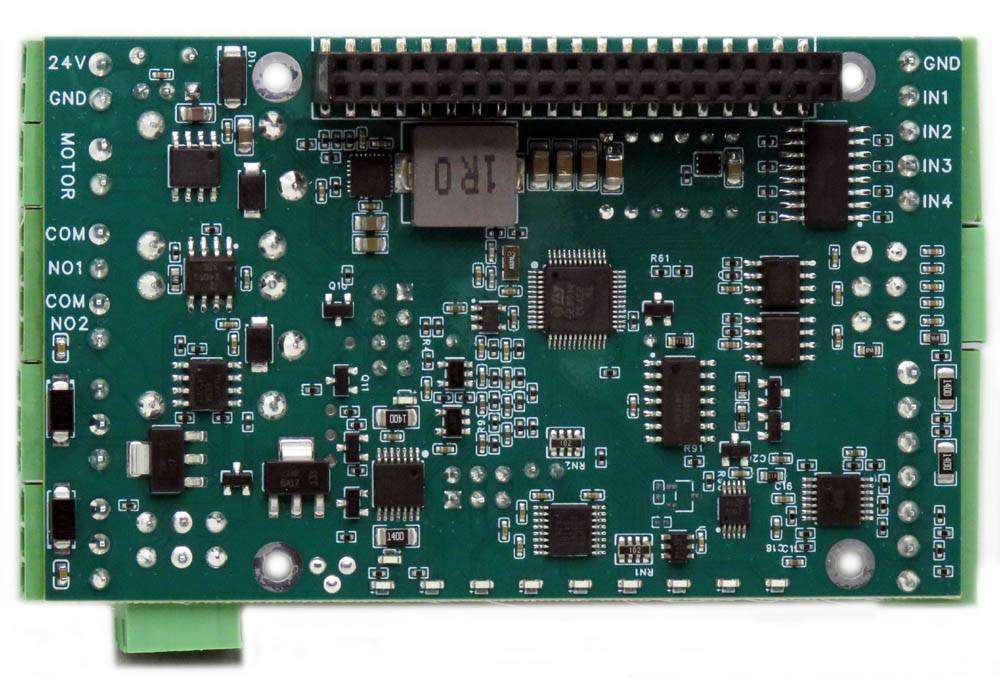

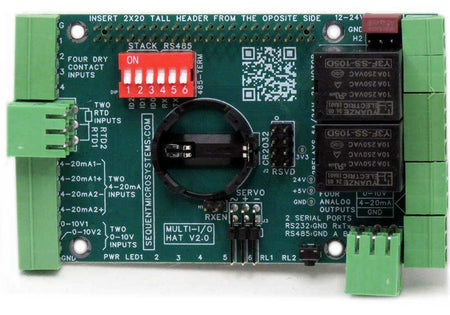
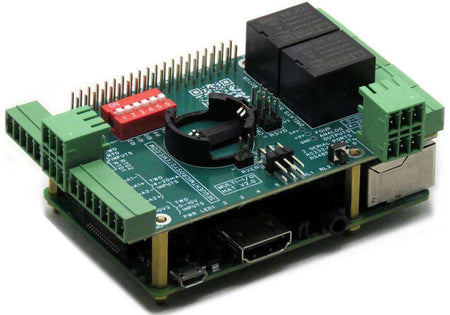


Multi-IO HAT 8-Layer Stackable for Raspberry Pi
Four digital Inputs, 2xRTD ports, 2x0-10V Inp and Out, 2x4-20mA In and Out, 2x5A/24V Relays, 2xServo ports, H-Bridge Motor, RS485, RS232, Watchdog.
Overview
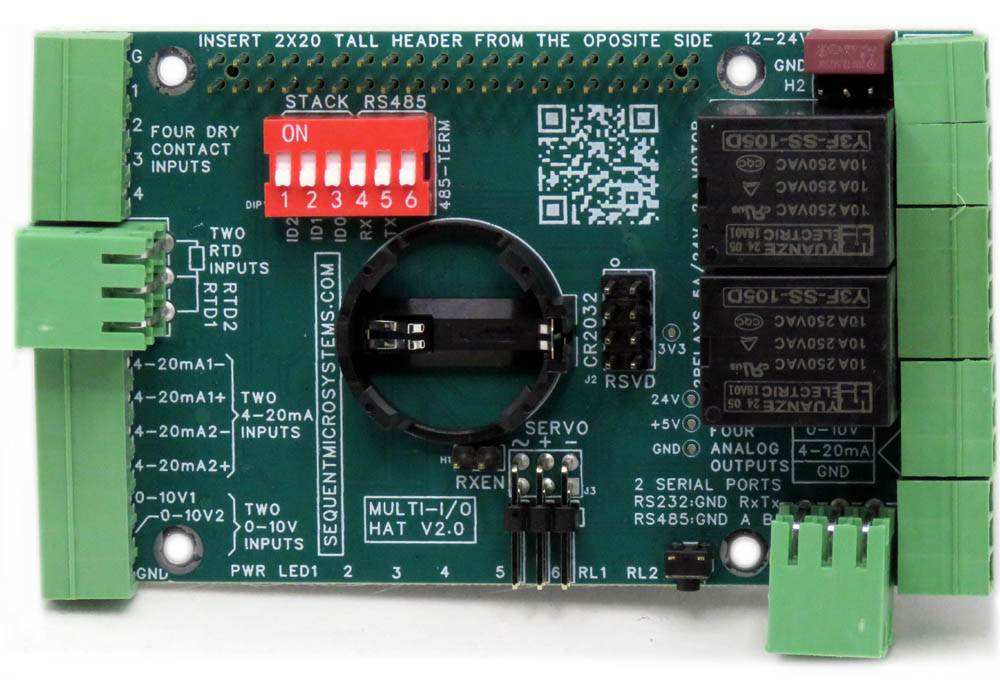
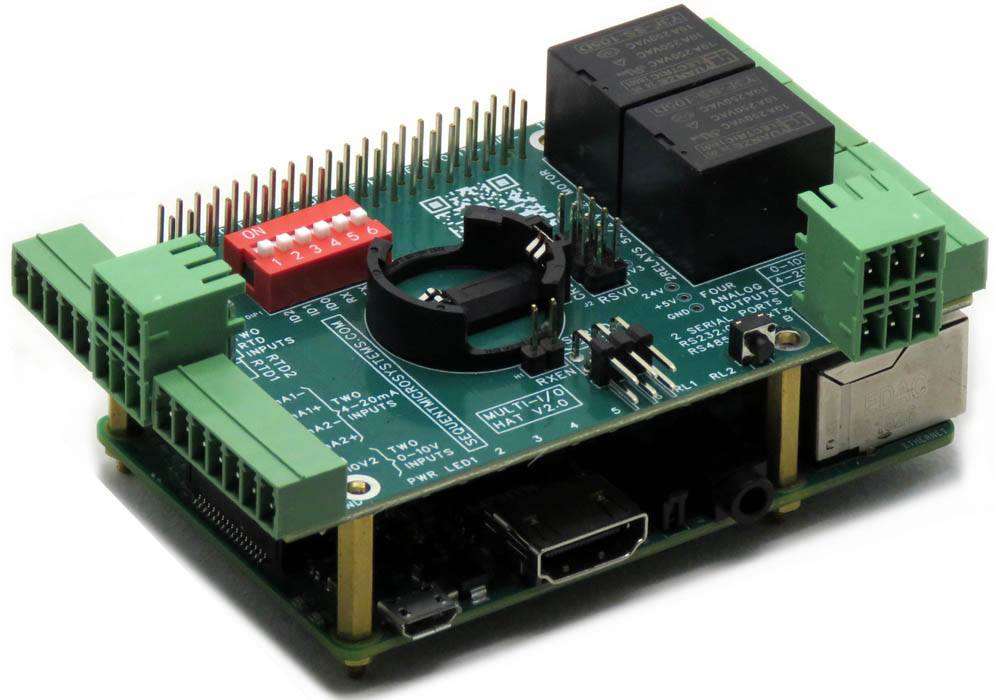
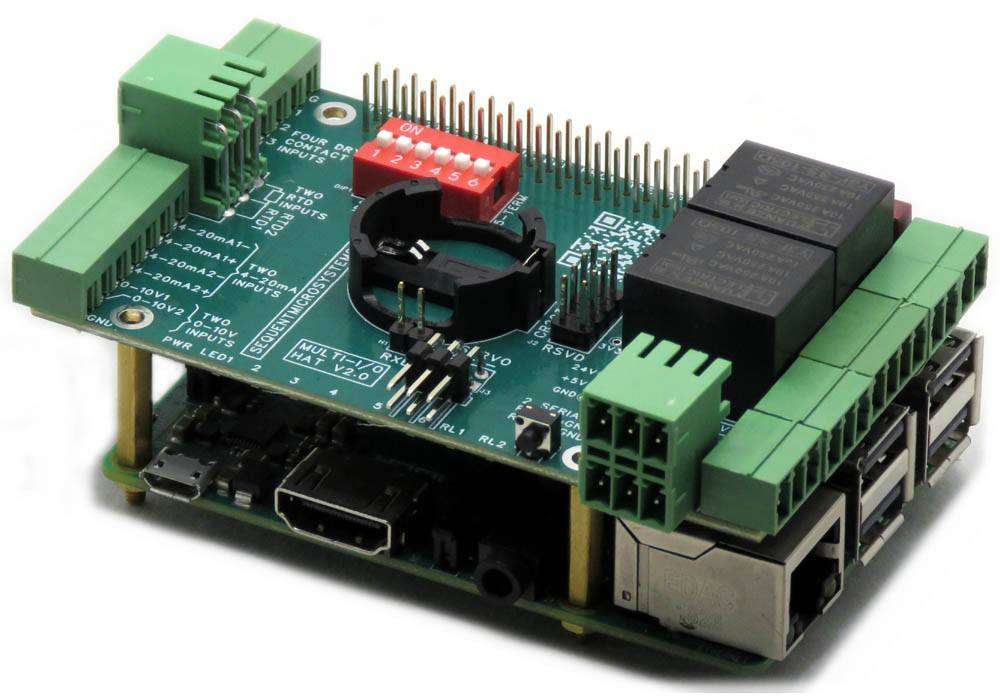
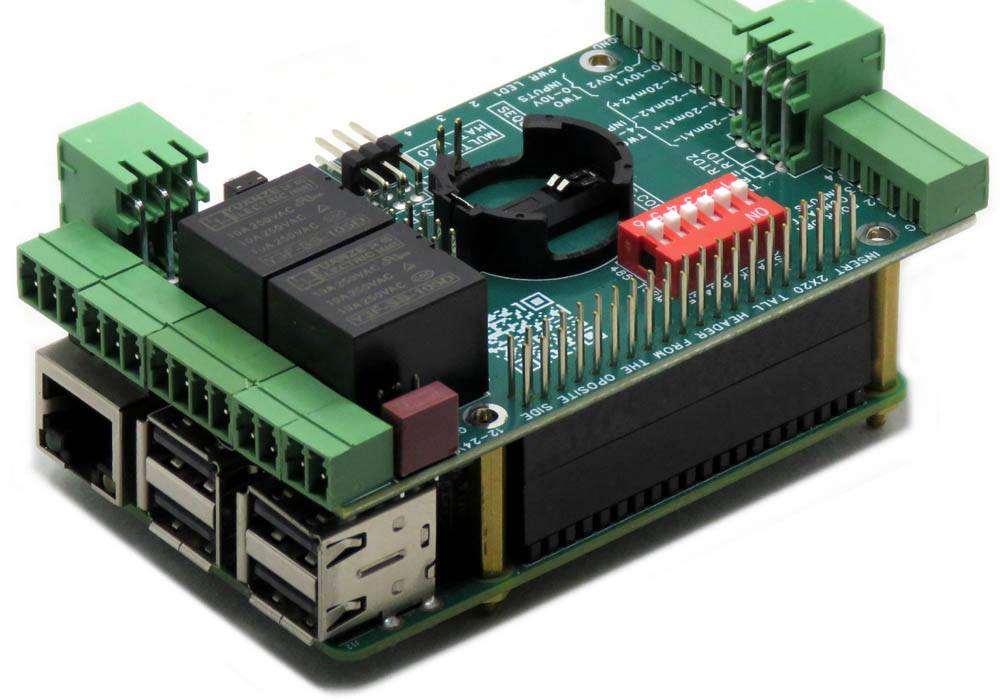
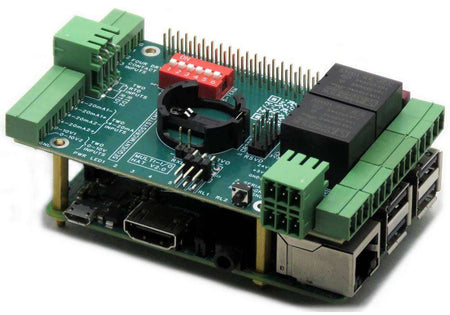
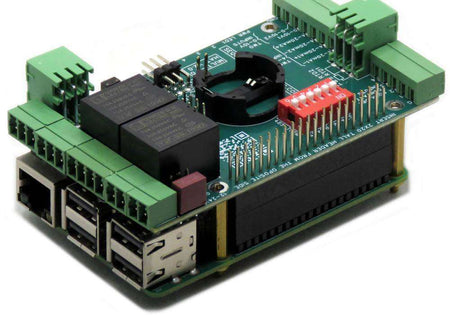
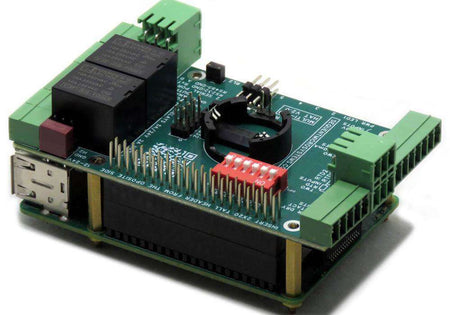
The Multi-IO HAT for Raspberry Pi combines digital inputs, RTD temperature measurement, voltage and current analog I/O, relays, motor control, and two communication ports in a compact, stackable board for industrial and home automation.
- Digital, RTD, voltage and current analog I/O, and relays on one board
- RS485/MODBUS and RS232 communication ports
- H-Bridge motor driver and two servo control ports
- Up to 8 cards of each type can be stacked and mixed with other Sequent HATs for virtually unlimited I/O expansion
- Hardware watchdog, Real-Time Clock, and stand-alone MODBUS operation without Raspberry Pi
Works with Open Automation Software
Compatible with widely used tools for control, monitoring, and system integration.
 |
 |
 |
 |
INTERFACES AND I/O
| I/O's | Communication | Software Integration |
|---|---|---|
| • Four Optically Isolated Digital Inputs (event counters up to 32 kHz) | • I2C Port to Raspberry Pi | • Command Line |
| • Two 3-Wire RTD Inputs (PT100) | • RS485/MODBUS Port | • Python Library |
| • Two 16-bit 0-10V Analog Inputs | • RS232 Port | • CODESYS Driver |
| • Two 16-bit 4-20mA Analog Inputs | • Home Assistant | |
| • Two 13-bit 0-10V Analog Outputs | ||
| • Two 13-bit 4-20mA Analog Outputs | ||
| • Two 5A/24V Relays (normally open contacts) | ||
| • H-Bridge PWM Motor Driver | ||
| • Two Servo Control Ports | ||
| Other Features | ||
| • Nine status LEDs (one power LED, six general purpose software-configurable LEDs) | ||
| • Wide range 10–30V power supply delivers 5V/3A to Raspberry Pi | ||
| • On-board push button for manual input | ||
| • Hardware watchdog and Real-Time Clock with CR2032 battery backup | • Pluggable connectors; two-level connectors for RTD and serial ports | |
| • Stand-alone MODBUS operation (no Raspberry Pi required) | • Eight-level stackable; uses only I2C, all GPIO pins available | |
DESCRIPTION
The Multi-IO HAT provides everything needed to build versatile industrial and home automation systems with Raspberry Pi — combining sensing, signal conditioning, actuation, communication, and motor control on a single board.
Four optically isolated digital inputs can be jumper-selected between two configurations: four inputs with a common ground or two fully isolated inputs. Inputs can also function as event counters up to 32 kHz.
Two 3-wire PT100 RTD inputs with 24-bit delta-sigma A/D converters measure temperature with accuracy well under 0.1°C. The 3-wire connection compensates for voltage drop across long cable runs.
Two 16-bit 0-10V inputs read voltage signals; two 16-bit 4-20mA inputs read current-loop sensors. Factory accuracy is approximately 1%; field calibration using command-line functions achieves up to 0.1% precision.
Two 13-bit 0-10V outputs drive light dimmers and proportional actuators; two 13-bit 4-20mA outputs drive current-loop devices. Factory accuracy is approximately 1%; command-line calibration functions achieve up to 0.1% precision.
Two SPDT relays switch DC or AC loads up to 5A at 24V. Boards with conformal coating can drive loads up to 240V. Only the normally-open contacts are brought to the connectors to maximize perimeter space.
The Real-Time Clock with CR2032 battery backup keeps accurate time through power failures, enabling data logging and time-stamped event recording. A command is available to read the battery voltage and determine when replacement is needed.
The hardware watchdog automatically power-cycles the Raspberry Pi if the software becomes unresponsive, ensuring continuous operation in unattended deployments. It activates after the first reset command is received from the Pi.
A power LED flashes to indicate the local processor is active. Eight additional LEDs can be configured in software to display the state of any input, output, or relay — triggering on digital highs/lows or on programmable analog thresholds.
An H-Bridge 5VDC/1A PWM motor driver enables proportional control of micro-motors. Two dedicated servo ports driven by PWM signals from the local processor allow independent servo motor control.
An on-board push button provides manual input to any application. Up to eight cards can be stacked on a single Raspberry Pi; the card uses only the I2C port, leaving all other GPIO pins available for other use.
TECHNICAL DETAILS
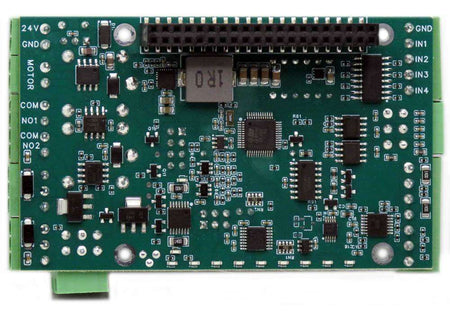
CARD LAYOUT

MECHANICAL SPECIFICATIONS

DIP SWITCH AND STACKING
The onboard six-position DIP switch configures both the stack address and the RS485 port behavior. Cards of different Sequent HAT types can be freely mixed in the same stack.
| Switch | Name | Function |
|---|---|---|
| ID0 | Stack ID bit 0 | Binary stack address bit 0 (LSB) — sets card level 0–7 |
| ID1 | Stack ID bit 1 | Binary stack address bit 1 |
| ID2 | Stack ID bit 2 | Binary stack address bit 2 (MSB) |
| RX | RS485 RX select | ON: Raspberry Pi receives RS485 directly |
| TX | RS485 TX select | ON: Raspberry Pi drives RS485 directly |
| TERM | RS485 termination | Enable on the last card in an RS485 chain to prevent signal reflections |
POWER REQUIREMENTS
Power supply: The card requires an external 10–30VDC power supply connected to its own pluggable power connector. Power requirement is 1A at 24V. The card supplies 5V and up to 3A to the Raspberry Pi over the GPIO bus, eliminating the need for a separate Raspberry Pi power supply.
PLUGGABLE CONNECTORS
All I/Os connect to pluggable screw terminal connectors. Two-level connectors are used for the RTD ports and serial communication ports to maximize the available perimeter space. All mating connector plugs are included with the card.
FIELD CALIBRATION
All analog inputs and outputs are factory-calibrated.
However, firmware commands allow the user to recalibrate the board or perform higher-precision calibration if required.
Calibration is performed using a two-point method. The selected calibration points should be placed as close as possible to the minimum and maximum values of the measurement range.
Input Calibration
To calibrate the inputs, the user must apply known analog reference signals. For example, calibrating 4–20 mA inputs requires providing accurate 4 mA and 20 mA current sources.
Output Calibration
To calibrate the outputs, the user must:
- Issue a command to set the output to a desired value.
- Measure the actual output using a calibrated instrument.
- Issue the corresponding calibration command to store the measured value.
Storage and Reset
Calibration values are stored in non-volatile flash memory, and the input transfer curve is assumed to be linear.
If an incorrect command or value is entered during calibration, a RESET command can restore all channels in the selected group to their factory calibration values. After a reset, the calibration procedure can be repeated.
Calibration Without External Sources
The board can also be calibrated without external analog signal sources by:
- Calibrating the outputs first, and
- Routing the calibrated outputs to the corresponding input channels for input calibration.
The following firmware commands are available for performing calibration:
CALIBRATE 0-10V INPUTS:               multiio <id> uincal <channel> <value>
RESET CALIBRATION OF 0-10V INPUTS:    multiio <id> uincalrst <channel>
CALIBRATE 4-20mA INPUTS:              multiio <id> iincal <channel> <value>
RESET CALIBRATION OF 4-20mA INPUTS:   multiio <id> iincalrst <channel>
CALIBRATE 0-10V OUTPUTS:              multiio <id> uoutcal <channel> <value>
RESET CALIBRATION OF 0-10V OUTPUTS:   multiio <id> uoutcalrst <channel>
CALIBRATE 4-20mA OUTPUTS:             multiio <id> ioutcal <channel> <value>
RESET CALIBRATION OF 4-20mA OUTPUTS:  multiio <id> ioutcalrst <channel>
COMMUNICATION INTERFACES
HARDWARE WATCHDOG
The Multi-IO HAT includes a hardware watchdog that ensures your system automatically recovers if the Raspberry Pi software becomes unresponsive. The watchdog is disabled at power-up and activates after it receives the first reset command from the Raspberry Pi.
| Watchdog Parameters | |
|---|---|
| Initial timeout period | Configurable — allows time for Raspberry Pi to boot and start the application |
| Running timeout period | Configurable — normal operating timeout |
| Off period | Configurable — duration the Raspberry Pi power is cut when timeout triggers |
| Reset counter | Stored in non-volatile flash; can be read or cleared at any time |
For a full list of watchdog commands, run: multiio -h
COMPATIBILITY
| Interface | I2C |
| GPIO used | GPIO2 (SDA), GPIO3 (SCL) — 2 pins for I2C; GPIO8, GPIO10 optionally used for RS485 (DIP switch RX/TX); GPIO32, GPIO33 for RS232 |
| Max stack | 8 cards of each type; different Sequent HATs can be freely mixed with virtually no upper limit on total I/O |
| Compatible with | All Raspberry Pi versions from Zero to 5 (40-pin GPIO header) |
DOWNLOADS
| User's Guide (PDF) | Schematics (PDF) | CAD | Software & Integrations |
|---|---|---|---|
| User's Guide V1.3 | Schematic V1.3 | 3D Printing Enclosure | Command Line |
| Schematic V2.0 | 3D STEP Model V1.3 | Python Library | |
| CODESYS Driver | |||
| Home Assistant |
COMPLIANCE
RoHS and REACH Compliance Declaration
WHAT'S INCLUDED
When you purchase the card you will receive the following items:
| 1. Multi-IO Card for Raspberry Pi |
|---|
 |
| 2. Mounting Hardware | |
|---|---|
 |
|
| 3. Connector Plugs for all Inputs and Outputs | |
|---|---|
 |
|
QUICK START
- Plug your card on top of your Raspberry Pi and power up the system.
- Enable I2C communication on Raspberry Pi using
raspi-config. - Install the software from GitHub:
~$ git clone https://github.com/SequentMicrosystems/multiio-rpi.git~$ cd /home/pi/multiio-rpi~/multiio-rpi$ sudo make install~/multiio-rpi$ multiio
The program will respond with a list of available commands. To read more about the CLI, please refer to the README file. If you would rather use a different platform, you can access the same functionality through dedicated, ready-to-use integrations in the Downloads tab above.
Expand Your System
-
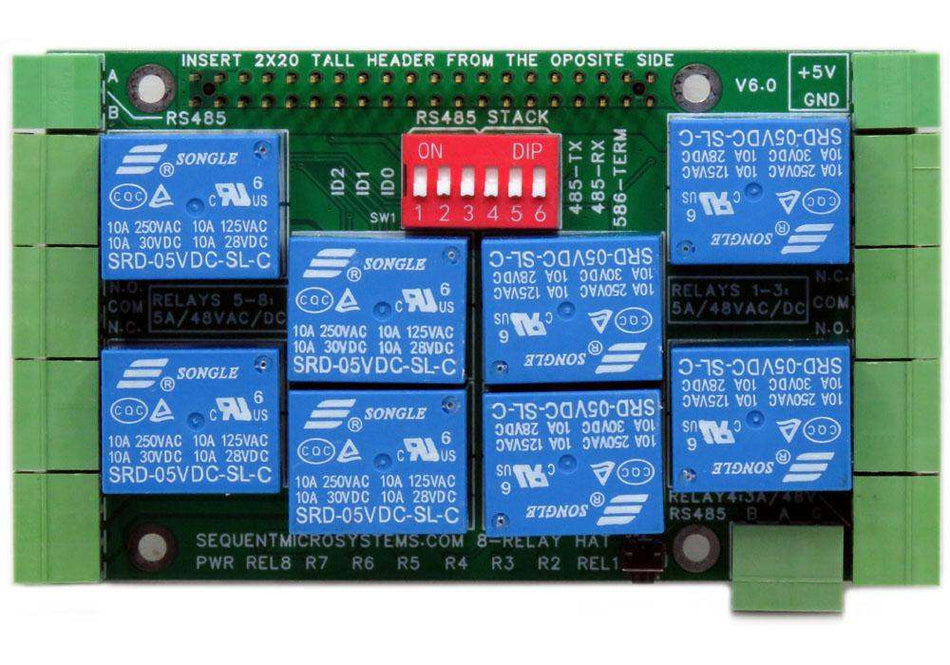 In stock
Eight Relays 4A/120V 8-Layer Stackable HAT for Raspberry Pi
Eight Relays 4A/120VAC, 24VDC N.O./N.C. contacts and LED indicators; RS485 Port. -
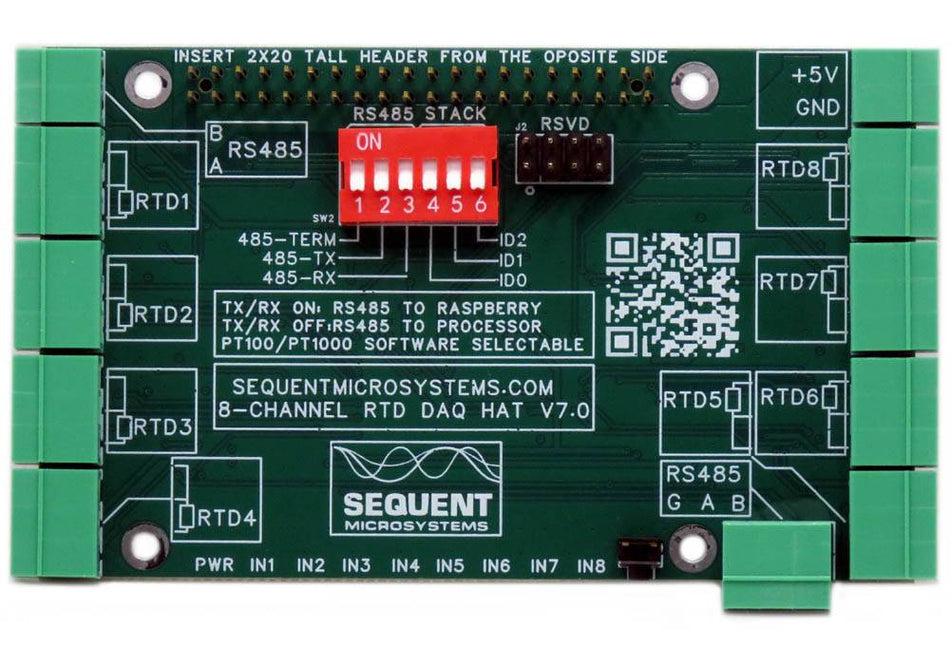 In stock
RTD Data Acquisition 8-Layer Stackable HAT for Raspberry Pi
Eight Channel RTD Data Aquisition HAT; 0.01% accuracy through calibration; PT100/1000 Sensors; RS485/MODBUS, Watchdog. -
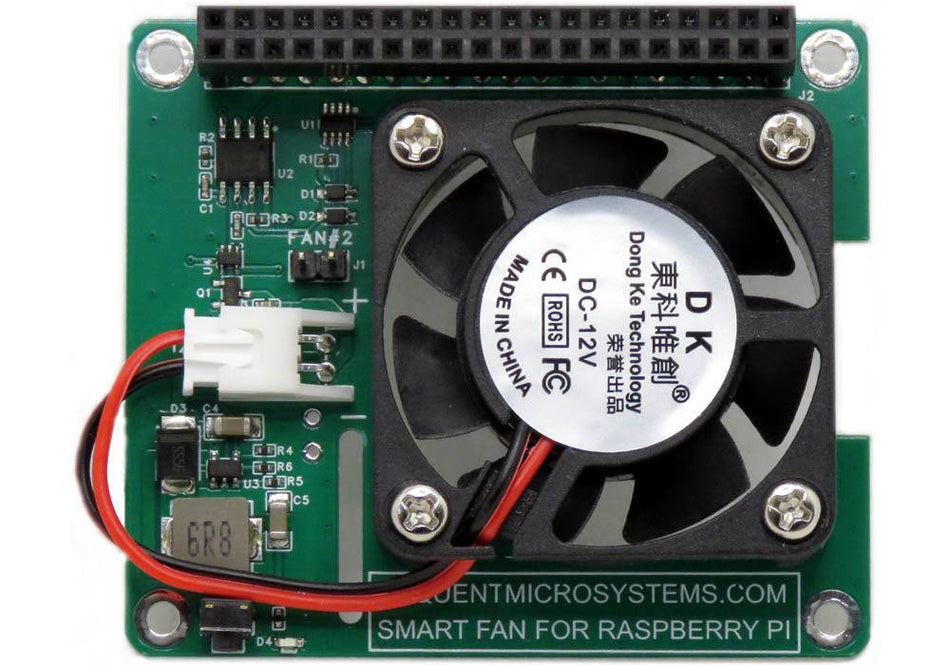 Coming soon
Smart Fan HAT the Best Cooling Solution for Raspberry Pi
PWM controlled 40x40x10mm Fan keeps Raspberry Pi temperature constant; Stackable with any other HAT. -
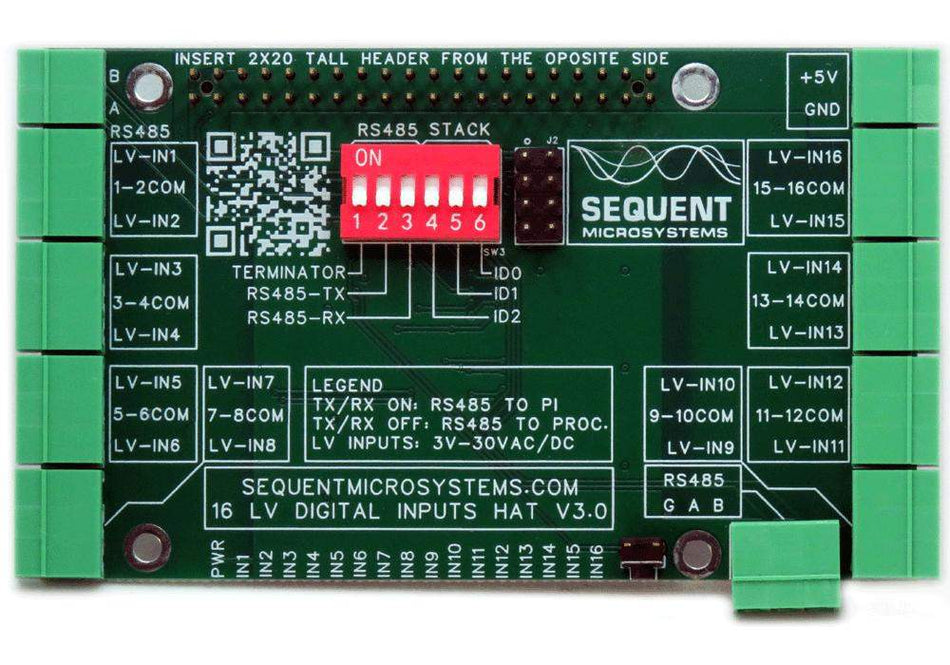 In stock
Sixteen LV Digital Inputs 8-Layer Stackable HAT for Raspberry Pi
Sixteen 3V-24V Opto-isolated Inputs with LED indicators; RS485/MODBUS, Hardware Watchdog.
